

Poor credit auto loans help borrowers with low credit scores finance vehicles. Lenders offer these loans with adjusted interest rates to offset higher risk.
What Does Poor Credit Mean in Auto Financing?
In auto financing, poor credit typically refers to a FICO score below 580. Lenders classify this range as “subprime” or “deep subprime.” These scores result from late payments, high credit utilization, defaults, or limited credit history.
Credit Score Range | Category | Description |
300–579 | Poor Credit | Subprime borrower profile |
580–669 | Fair Credit | Near-prime profile |
670–739 | Good Credit | Prime borrower profile |
740–799 | Very Good Credit | Lower-risk borrower |
800–850 | Excellent Credit | Best loan terms available |
Why Do Poor Credit Loans Exist?
These loans exist because many people with damaged credit still need reliable transportation. Subprime auto loans offer a second chance at financing, especially when public transport isn’t a viable option.
How Credit Scores Affect Auto Loan Eligibility and Rates
Your credit score is the most influential factor in car loan approval and interest rates.
FICO vs VantageScore: What’s the Difference?
- FICO Score: Used by 90% of top lenders. Focuses on payment history (35%), credit utilization (30%), and length of credit history.
- VantageScore: Used in some online platforms. Emphasizes total balances, credit behavior, and available credit.
How Do Lenders Categorize Scores?
Lenders use score brackets to assign risk:
- Prime Loans: Scores above 670
- Subprime Loans: Scores between 580–669
- Deep Subprime Loans: Scores below 580
How Does a Low Score Affect Loan Terms?
- Higher APRs: Bad credit auto loans average 10%–20% APR vs 3%–6% for prime borrowers.
- Shorter loan terms: To reduce long-term lender risk.
- Larger down payments: To lower loan-to-value ratios.
Poor Credit Auto Loans vs Traditional Auto Loans
Poor credit loans differ in structure, terms, and approval requirements.
Feature | Traditional Auto Loans | Poor Credit Auto Loans |
Credit Score Needed | 670+ | Below 580 |
APR Range | 3%–6% | 10%–20%+ |
Down Payment Requirement | Low or Zero | Often required |
Lender Type | Banks, Credit Unions | Subprime lenders, Dealers |
Flexibility | High | Limited by credit history |
Subprime vs. Prime Loans: Prime borrowers get better terms. Subprime borrowers face higher costs and fewer vehicle choices due to stricter approval conditions.
How to Get Approved for Poor Credit Auto Loans in 2025
Follow these steps to improve your approval odds in 2025:
- Check Your Credit Report
Use Experian, Equifax, or TransUnion to identify errors or issues. - Fix Immediate Credit Issues
- Pay down small debts.
- Clear collections or disputes.
- Lower credit utilization below 30%.
- Gather Required Documents
Prepare the following:- Proof of income (pay stubs or tax returns)
- Employment verification
- Utility bills or bank statements
- Valid driver’s license
- Find a Suitable Lender
Research lenders that specialize in bad credit car loans. - Consider a co-signer.
A co-signer with good credit can lower your rate and increase approval chances. - Get Preapproved
Use soft-pull options to get loan estimates without affecting your credit score.
Best Lenders for Poor Credit Auto Loans
These lenders specialize in subprime and bad credit financing:
Lender | Best For | Preapproval Available |
Capital One Auto | Reputable subprime options | Yes (soft pull) |
Carvana | Online used car loans | Yes |
RoadLoans | Full bad credit focus | Yes |
Credit Acceptance | Dealer-integrated lending | Yes |
MyAutoLoan | Lender comparison marketplace | Yes |
Online platforms like MyAutoLoan offer access to multiple loan offers from subprime-friendly lenders.
Down Payments and Trade-ins for Poor Credit Loans
Larger down payments improve your loan approval odds. Trade-ins can also serve as equity.
Why Is a Down Payment Important?
- Reduces lender risk
- Lowers monthly payments
- Improves loan-to-value (LTV) ratio
A typical down payment for bad credit car loans ranges from 10% to 20% of the vehicle’s price.
How Trade-ins Help
Use tools like Kelley Blue Book to estimate your car’s value. The equity from your trade-in can:
- Cover or increase the down payment
- Offset negative equity from prior loans
- Reduce total borrowed amount
Mistakes to Avoid When Applying

Avoiding common errors can increase your approval rate and save money:
- Applying to too many lenders at once
Multiple hard pulls reduce your score. - Ignoring loan terms
Understand prepayment penalties, variable APRs, and balloon payments. - Overextending your budget
Only borrow what you can afford. Monitor your debt-to-income (DTI) ratio. - Financing extras like extended warranties
These add costs and may not be necessary.
How to Improve Approval Odds Before Applying
You can increase approval chances with small strategic actions:
Quick Credit Boost Strategies
- Pay off credit card balances to reduce utilization
- Request a rapid rescore if you cleared disputes
- Open a secured credit card and make small monthly payments
Use a co-signer.
A co-signer helps you:
- Get better rates
- Access larger loan amounts
- Strengthen weak borrower profiles
Make sure the co-signer understands the shared responsibility.
Why Preapproval Matters for Poor Credit Auto Loans?
Preapproval shows your estimated loan terms and helps with budgeting.
Soft Pull vs Hard Pull
- Soft Pull: No credit score impact
- Hard Pull: Impacts score temporarily
Preapproval Benefits
- Know your budget upfront
- Avoid unnecessary credit hits
- Compare multiple lenders easily
Most preapproval letters are valid for 30–60 days and show estimated APR, loan terms, and monthly payments.
Leasing vs Buying with Poor Credit
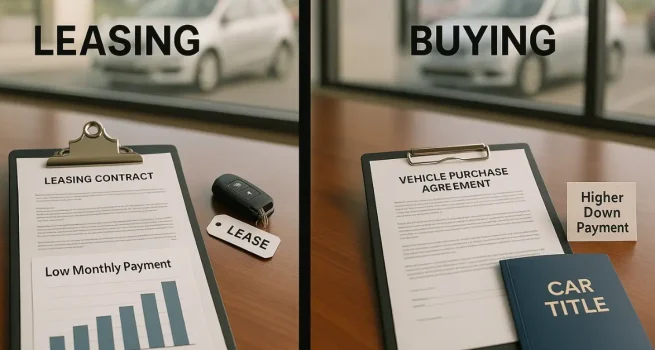
Leasing can be an alternative for those with poor credit.
When Does Leasing Make Sense?
- Short-term vehicle need
- Lower monthly payments
- Lower repair costs on new cars
Key Leasing Limits
- Mileage Caps: Often 10,000–15,000 miles/year
- Vehicle Return Conditions: Fees for wear and tear
- End-of-Lease Options: Lease-to-own or walk away
Some lenders offer closed-end leases for subprime borrowers with higher upfront costs.
FAQs About Poor Credit Auto Loans
Yes, many subprime lenders accept scores around 500, but rates may be high.
Interest for poor credit auto loans often ranges between 10% and 20%, depending on income, DTI, and loan length.
A co-signer isn’t required, but it helps reduce interest and increases approval odds.
Yes. If your credit improves, you may refinance for a better rate or longer term.
Final Checklist Before Signing
Before signing a poor credit auto loan, review this checklist:
✅ Review the APR and total interest paid.
✅ Confirm the monthly payment fits your budget.
✅ Understand prepayment penalties or hidden charges.
✅ Get the car inspected (especially for used cars).
✅ Verify insurance coverage meets lender requirements.
✅ Double-check the auto loan contract terms
Always compare multiple loan offers and read all disclosures before committing.
Social Media
 Follow us for real tips, stories, and credit-friendly updates:
- Instagram: Click Here
- Facebook: Click Here

